
 PDF
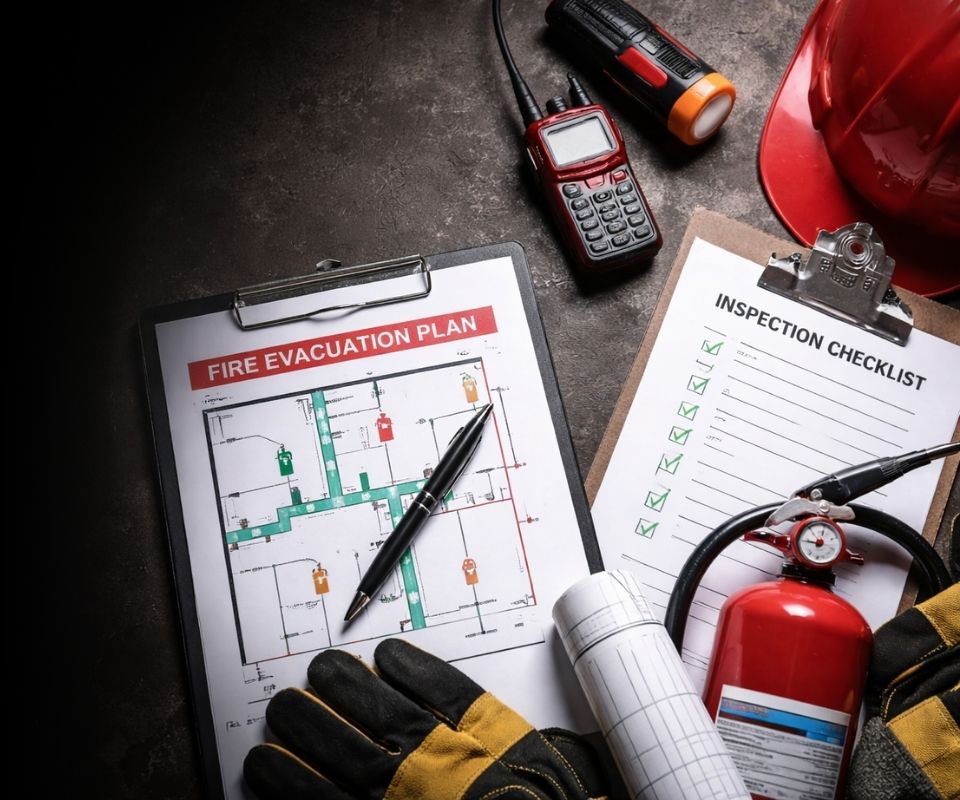
PDFFire Marshal Pre-Inspection
Learn what to expect and how to prepare your documentation and property for an official AHJ inspection.
 PDF
PDFAnnual Fire Safety Walkthrough Checklist
A comprehensive checklist for property managers to use on their annual site safety walkthroughs.
 PDF
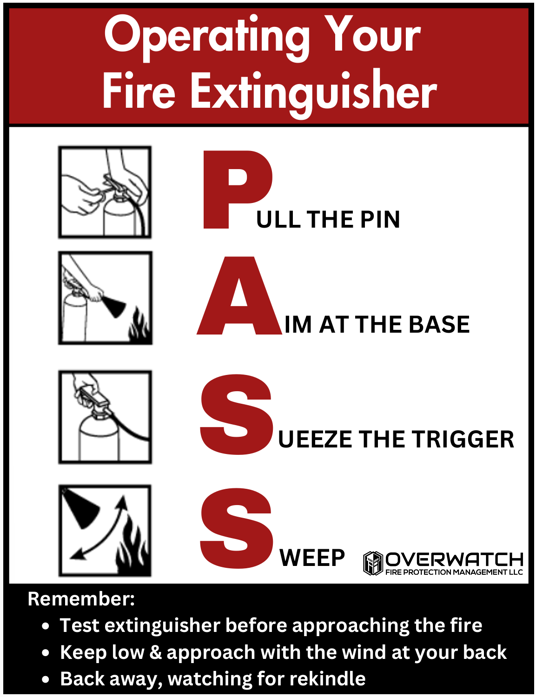
PDFThe PASS Method - Operating Your Fire Extinguisher
A quick-reference graphic on the proper four-step process for using a fire extinguisher safely and effectively.
 PDF
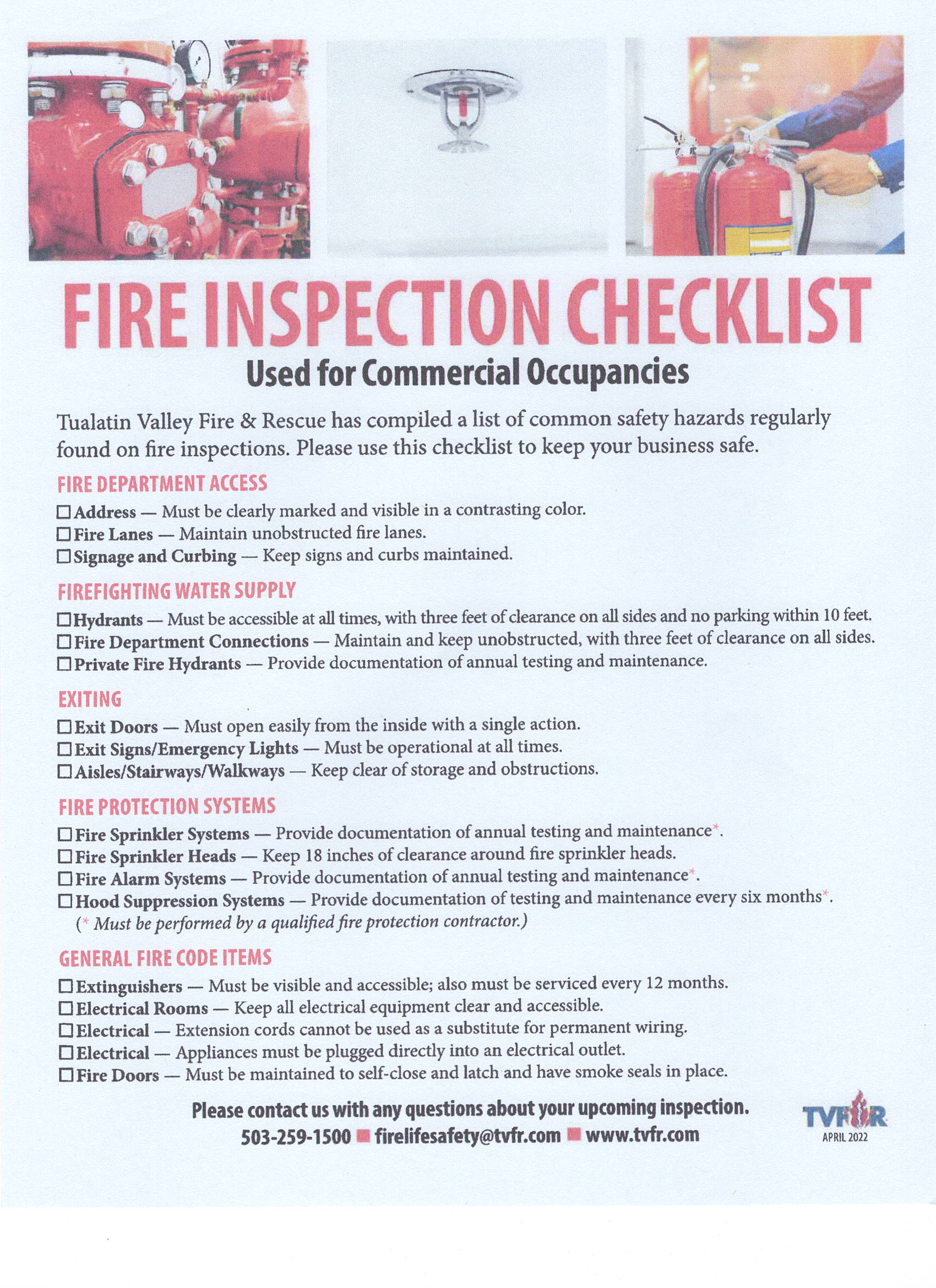
PDFTualatin Valley Fire Inspection Checklist
Tualatin Valley Fire & Rescue has compiled a list of common safety hazards regularly found on fire inspections. While this may not be exact for your local AHJ, this is a powerful tool in getting yourself ready for an upcoming inspection!
 PDF
PDFOverwatch Service Overview
How the Overwatch Advantage manages every job, asset, and deficiency to achieve excellence in the field - and minimize risk for you, the property owner.
 PDF
PDFOverwatch Handout
A useful postcard to add to your office. Get a notice of a deficiency? Call Overwatch for immediate scheduling and resolution!
National Fire Protection Association
Washington State Fire Marshal's Office
Oregon State Fire Marshal
Cal Fire
Nevada State Fire Marshal



The government agency or official responsible for enforcing the fire code in your area. This is typically the local Fire Marshal or Fire Chief who inspects your building and issues compliance notices.
The organization that writes the codes and standards for fire safety. Includes NFPA 25 (Sprinklers), NFPA 72 (Alarms), and NFPA 70 (Electrical).
A broad term covering all systems and measures designed to protect people and property from fire. This includes sprinklers, alarms, extinguishers, exit signs, and emergency lighting.
The industry term for the ongoing services required by code to ensure your fire protection systems work when needed. This is the core service Overwatch provides.
The connection point on the exterior of your building (usually marked with a sign) that allows firefighters to pump supplemental water into your building’s sprinkler or standpipe system.
The "brain" of your fire alarm system. It monitors sensors and activates the alarms/strobes during an emergency. It is usually a red or beige box located in the main lobby or riser room.
Deficiency: A minor issue that needs repair but doesn't stop the system from working (e.g., a painted sprinkler head).
Impairment: A critical failure where the system is out of order and cannot protect the building (e.g., a broken fire pump or a closed main water valve).
Vertical pipes running up the stairwells of multi-story buildings. They act like internal fire hydrants, allowing firefighters to connect hoses on upper floors without dragging lines all the way up from the street.
A critical valve assembly that prevents stagnant water from your fire sprinkler system from flowing backward into the public drinking water supply. These must be tested annually.
The main vertical supply pipe that extends from the water supply to feed the sprinkler lines on each floor. Usually found in a dedicated "Riser Room."
A safety device attached to your fire sprinkler control valves. If someone tries to close the valve, this switch instantly sends a signal to the fire alarm panel.
The red upright valve usually located in the parking lot. It displays "OPEN" or "SHUT" through a small window, allowing the Fire Department to see if the building has water supply without going inside.
A stress test for your piping. Contractors pump water into the system at high pressure (often 200 PSI) for 2 hours to check for leaks. Required every 5 years for Standpipe and FDC piping.
The technical term for the devices that alert occupants during a fire. This includes Strobes, Horns, and Speakers.
Green: Fully operational.
Yellow: Has a deficiency that needs repair.
Red: System is impaired or non-functional.
Ready to Download?
Confirm below to save this document to your device.